

Sports at SELA
Soccer and tennis, coached in Spanish, from age two through sixth grade — every skill broken into its smallest possible step.
We break every skill into its smallest possible step.
A four-year-old cannot dribble around a cone until she can run and stop on signal. A ten-year-old cannot place a passing shot until his footwork recovers him to ready position. So we never start with the finished skill — we start with the piece underneath it, and we build.
- 01
Parallel play
Everyone with their own ball.
- 02
Partner play
Passing, feeding, rallying.
- 03
Team & match play
Rules, scoring, positions, fair play.
- Smaller balls
- Lighter rackets
- Lower nets
- Shorter fields
And because this is SELA, coaching happens in Spanish. Every drill, every correction, every cheer extends the immersion environment onto the field and the court.
¿Estamos listos?
¡Sí, estamos listos!
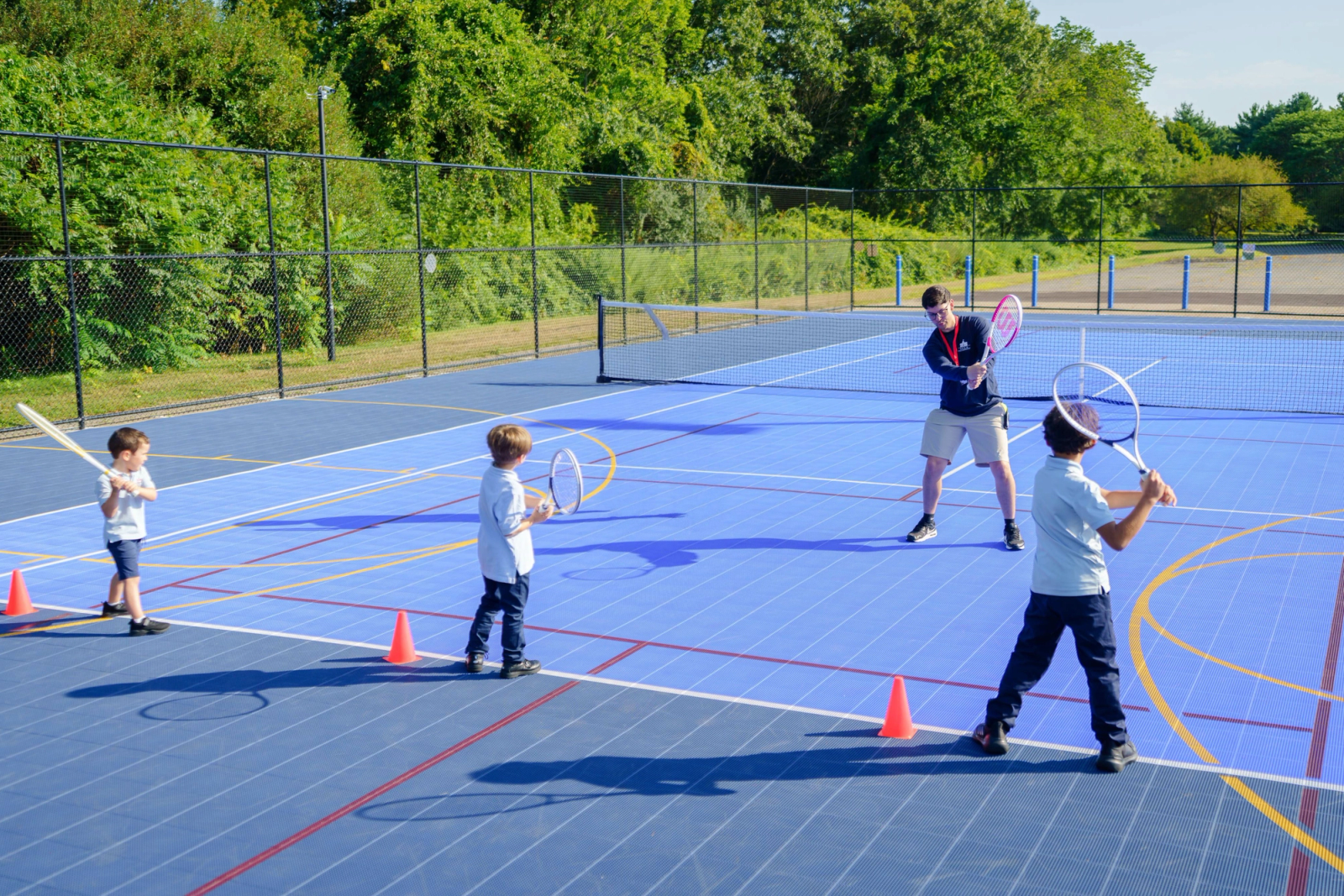
Soccer and tennis, one method.
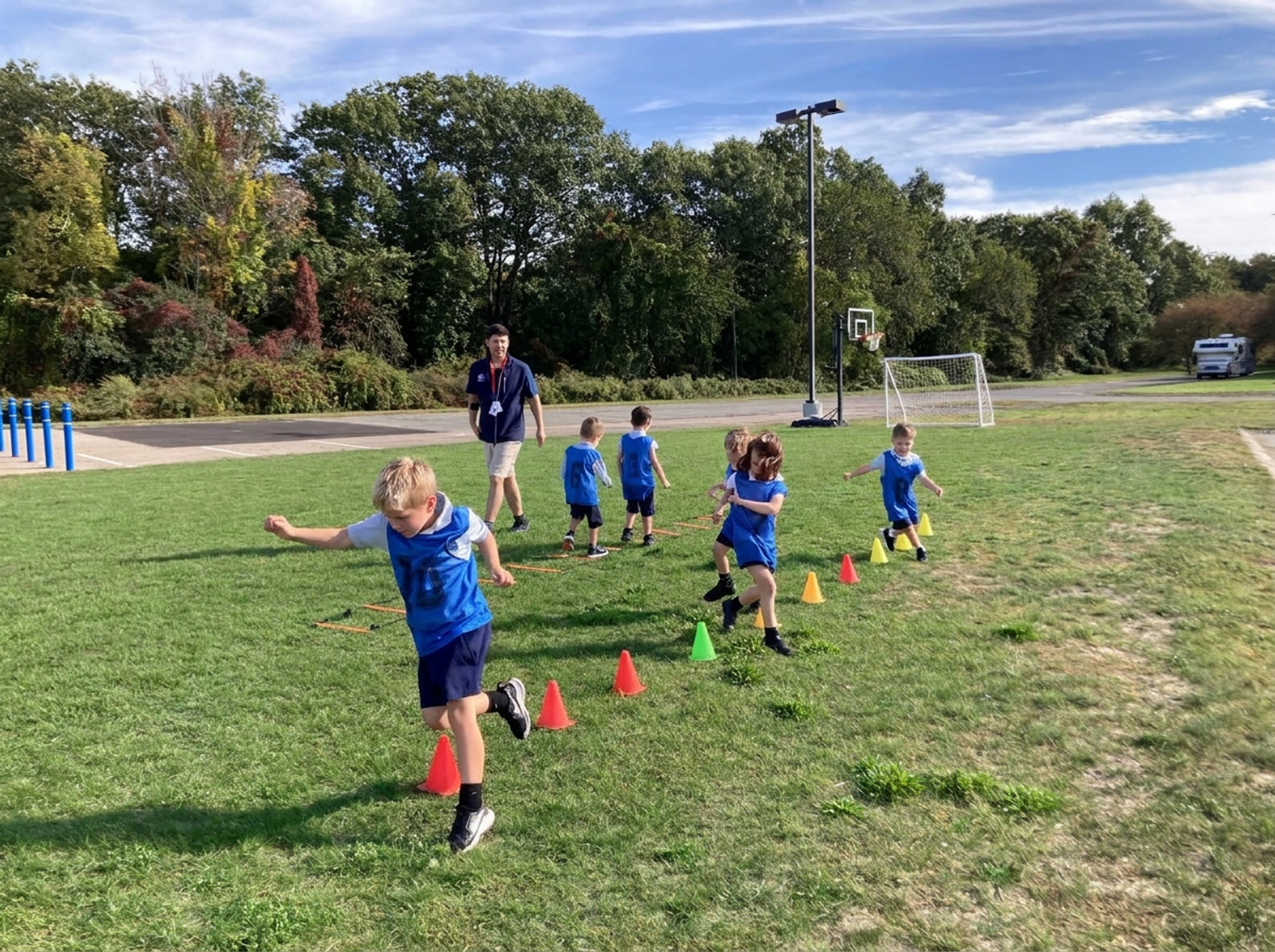
Soccer
- 01 Pushing the ball with the foot
- 02 Dribbling past defenders
- 03 Passing into space
Tennis
- 01 Holding the racket safely
- 02 A controlled forehand
- 03 Sustained rallies and match play
Sport-specific technique that builds progressively — the same ladder, two games.
Six stages, from first touch to full match play.
- 01 Explore Ages 2–3 Meeting the equipment, sharing space, basic body control
- 02 Build Ages 3–4 First skills, target practice, simple game concepts
- 03 Play Ages 4–5 (Pre-K) Applied skills, small-sided games, fair play
- 04 Compete K–2nd Grade Real games with rules, positions, scoring, teammates
- 05 Refine 3rd–4th Grade Technique correction, tactics, consistency under pressure
- 06 Perform 5th–6th Grade Full match play, strategy, leadership, coaching younger players
Children advance on developmental readiness, not calendar age. A child may be ready for Stage 2 soccer skills at 3.5 years but still need Stage 1 support in turn-taking — and that is normal. Coaches assess each quarter and adjust.
Every session balances four things at once.
They are integrated, never sequenced.
Skills
Sport-specific technique that builds progressively — in soccer and in tennis alike, from the first contact to sustained match play.
Rules & Game Readiness
Boundaries, safety, taking turns, scoring, respecting the referee. The knowledge that makes a game possible.
Gross Motor Development
Balance, agility, coordination, stamina, eye-tracking. The movement base that makes every skill executable.
Social-Emotional & Discipline
Turn-taking, accepting outcomes, self-regulation, resilience after mistakes. The foundation of being a teammate.
Discipline in four wordsA child who has skills but no self-control cannot play.A child who has discipline but no gross-motor base cannot execute.
- Respeto Respect
- Esfuerzo Effort
- Autocontrol Self-control
- Juego limpio Fair play
- Respeto
- For coach, teammate, opponent, and equipment.
- Esfuerzo
- Try every drill, finish what you start, ask for help.
- Autocontrol
- No throwing rackets, no yelling, breathe and continue.
- Juego limpio
- Honest calls, fair turns, the same handshake win or lose.
Four words, repeated at every age until they are internalized.
The same shape, every session.
The structure stays constant from age 2 through 6th grade; only the content inside each block scales.
- 5 min Warm-up — animal walks, follow-the-leader, Spanish call-and-response
- 10 min Skill drill — one core skill, smallest possible step, coach demos
- 10 min Skill application — applied to a target, partner, or obstacle course
- 10 min Mini-game — parallel play, partner game, or small-sided match by stage
- 5 min Cool-down & circle — stretches, water, "¿Qué aprendiste hoy?"
40 minutes · age 2 through 6th grade
We are not filling time with games. We are teaching children how to learn a sport—and how to keep at it.
Soccer and tennis, coached in Spanish, from age two through sixth grade. The skills transfer. The habits — effort before outcome, self-control under frustration, an honest call against yourself — transfer further.